
A Nepal Epic · Kathmandu Valley
The Lake That Became a Kingdom
Legend says this valley was once a lake, until a bodhisattva cut the hills with his sword and let the water out. What rose from it was a kingdom of three royal cities, living gods and seven World Heritage monument zones.
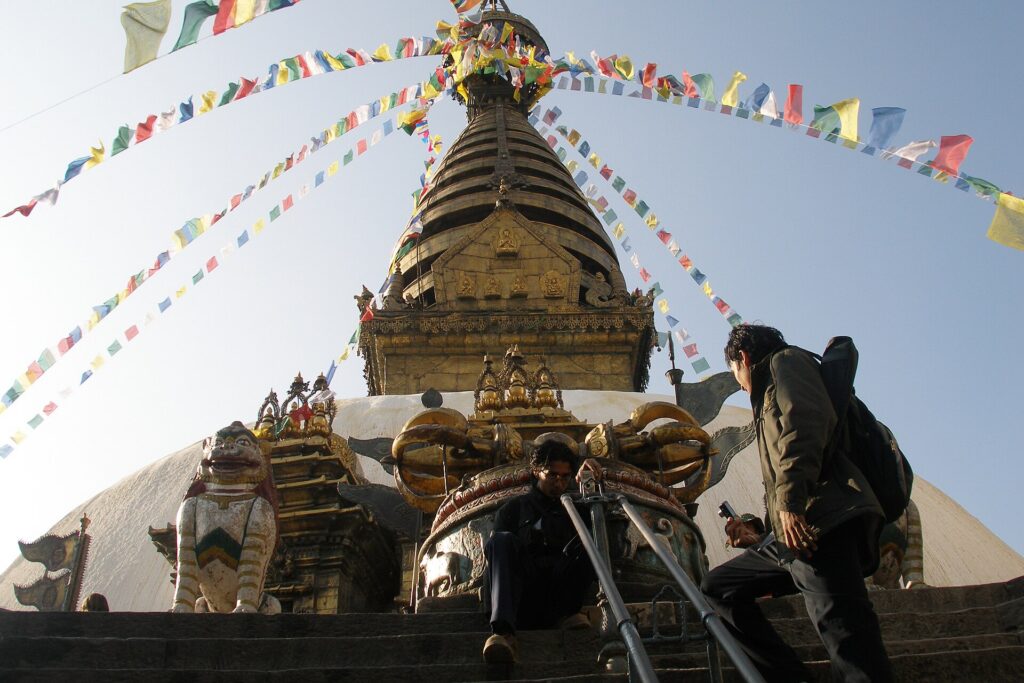
Stand on the hill of Swayambhu at dawn and look down. The bowl of the Kathmandu Valley spreads out below, rimmed by green hills and, on a clear day, the white wall of the Himalaya. Long ago, the old texts say, all of this lay under water. Today three royal cities, two great stupas, a holy temple of Shiva and a living goddess share the valley floor. No other place on Earth packs so many centuries of art, faith and festival into so small a space.
Chapter 1
The Lake of Serpents
According to the Swayambhu Purana, the Kathmandu Valley was once a great lake, home to the nagas, the serpent spirits. In its centre floated a lotus that shone with a light of its own. The bodhisattva Manjushri saw it, came to the lake, and with one stroke of his sword cut a gorge through the hills at Chobhar. The water rushed out, and the valley became land people could live on.
Where the lotus came to rest, the hill of Swayambhu rose, crowned today by its great stupa. Geologists agree that the valley really was a lake long ago, and the gorge at Chobhar still carries the Bagmati River out of the valley.
- See: Chobhar gorge and the tall Manjushri statue at Chobhar, south-west of Kathmandu
- Visit: Taudaha lake nearby, where legend says the serpents found a new home
- Climb: the stairway to Swayambhunath at sunrise for the view of the whole valley
Chapter 2
Three Kingdoms, One Valley
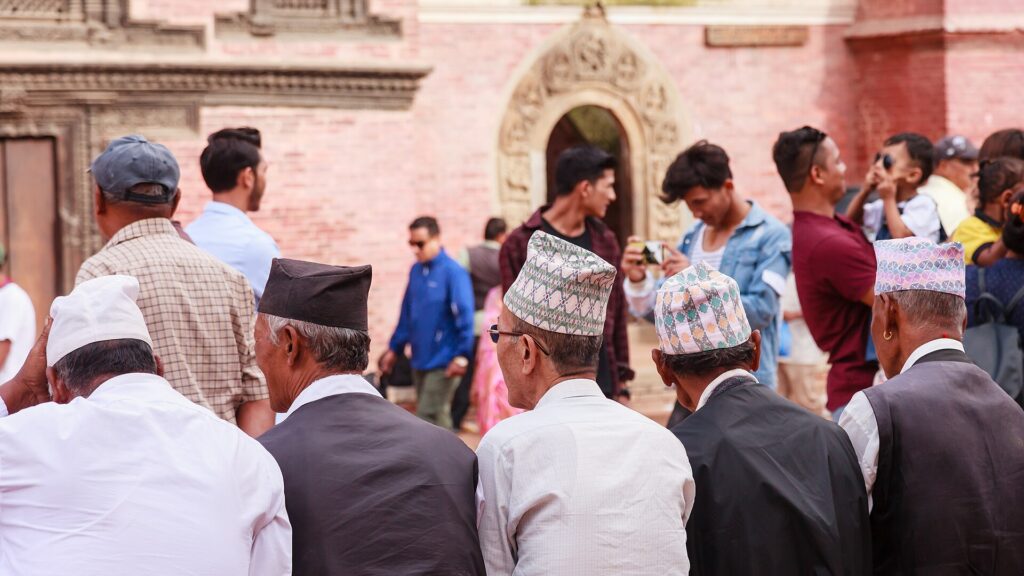
For centuries the valley was split between three royal cities: Kathmandu, Patan and Bhaktapur. Their Malla kings were rivals, and each poured its wealth into palaces, temples, courtyards and fountains, trying to outshine the others. The result is three Durbar Squares, each a museum without walls.
Patan is the city of fine art, with its metalwork and the Golden Temple. Bhaktapur is the best preserved, with the five-roofed Nyatapola temple and its pottery square. Kathmandu's Durbar Square was the seat of kings until the valley became the heart of a united Nepal.

Chapter 3
The Living Goddess
In a carved palace on Kathmandu's Durbar Square lives the Kumari, a young girl from the Shakya community worshipped as a living goddess, the embodiment of the goddess Taleju. Legend says Taleju once played dice with the last Malla king of Kathmandu, Jaya Prakash Malla, until he angered her and she vanished.
The king built the Kumari's house and, in 1756, began the chariot procession that still carries her through the old city during Indra Jatra, Kathmandu's great festival of masked dances. Thousands crowd the streets to catch a glimpse of her, believing it brings good fortune.
- When: Indra Jatra, usually in August or September
- Where: Kumari Ghar, at the corner of Durbar Square and Basantapur
- Respect: never photograph the Kumari when she appears at her window

Chapter 4
The City Named After a Tree
Kathmandu takes its name from the Kasthamandap, the wooden pavilion. Legend says it was built from the timber of a single giant tree. For centuries it was a public rest house where traders on the routes between India and Tibet stopped for the night.
On 25 April 2015 a magnitude 7.8 earthquake struck Nepal, and the Kasthamandap collapsed along with many other monuments. Kathmandu chose to rebuild. Using traditional Newar craftsmanship, the pavilion that gave the city its name now stands again, a symbol of a valley that refuses to fall.
Chapter 5
Where Two Faiths Share One Sky
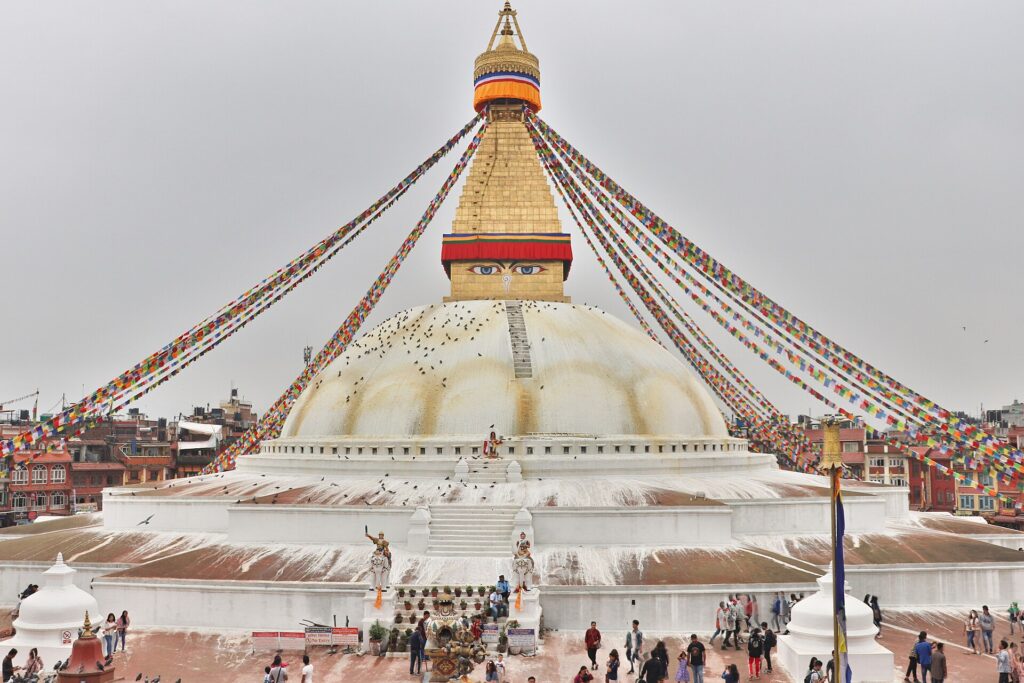
In the Kathmandu Valley, Hindu and Buddhist worship live side by side, often in the same courtyard. At Pashupatinath, on the banks of the Bagmati, lamps blaze at the evening aarti for Shiva. A short drive away, pilgrims circle the vast white dome of Boudhanath beneath the painted eyes of the Buddha.
In 1979 UNESCO listed the valley as one World Heritage Site made of seven monument zones: the Durbar Squares of Kathmandu, Patan and Bhaktapur, the stupas of Swayambhunath and Boudhanath, and the temples of Pashupatinath and Changu Narayan.
- 7monument zones in one World Heritage SiteKathmandu Valley
- 1979listed by UNESCOAmong the first World Heritage Sites in Asia
- 3royal citiesKathmandu, Patan and Bhaktapur
- 1756first Kumari chariot processionBegun by King Jaya Prakash Malla
Watch
Watch
Videos are from YouTube. Nothing loads from YouTube until you press play.
Things to do in the valley
Experience Kathmandu Valley
- Sunrise at SwayambhunathThe whole valley at your feetEarly morning
- Evening aarti at PashupatinathLamps and song on the BagmatiEvening
- Circle Boudhanath at duskButter lamps, monks and rooftop cafes1–2 hours
- Kathmandu Durbar Square and Kumari GharPalaces, temples and the living goddessHalf day
- Patan Museum and Golden TempleThe finest Newar artHalf day
- Bhaktapur and juju dhauNyatapola, potters and the famous curdFull day
- Chobhar gorge and TaudahaWhere the lake legend beganHalf day
- Indra JatraMasked dances and the Kumari's chariotAugust–September
Collect the seven monument zones
Visiting with respect: Walk clockwise around stupas, remove your shoes where asked, and remember that only Hindus may enter the main temple at Pashupatinath. Watch cremations from the east bank quietly and without close-up photos.


Travel the story
Travel the valley of three kingdoms
Walk the legend in order: the hill where the lake was drained, the three royal cities and the home of the living goddess.
-
SwayambhunathWhere the story begins
The hilltop stupa that legend says rose from the lake. Go early for the view over the valley.
-
Kathmandu Durbar SquareThe living goddess
The old royal palace and the Kumari's house.
-
Patan and BhaktapurThe rival kingdoms
Two royal squares of temples, courtyards and craft workshops. Give each at least half a day.
-
Pashupatinath and BoudhanathThe sacred valley
The evening aarati on the Bagmati, then the great stupa at dusk.
Open this 4-day route in the trip plannerTime it with a festival
The planner works out each day, the travel times and the map. You can change the number of days and the start date there.
Plan your visit
Plan your Kathmandu Valley trip
When to go
- October–November Clear skies and mountain views: the best season.
- March–April Warm days and spring festivals.
- Indra Jatra Usually August or September.
- June–September Monsoon: green, wet and less crowded.
Getting there and around
- By air Tribhuvan International Airport, Kathmandu.
- In the valley Taxis and ride apps between the three cities; walk inside the old towns.
- Tickets Each Durbar Square and some temples charge visitors an entry fee.
Where to base yourself
- Thamel Lively, with the most hotels and restaurants.
- Patan Quieter, with courtyard guesthouses near the art.
- Bhaktapur Stay overnight to see the old city after the day visitors leave.
- Boudha Peaceful mornings around the stupa.
Three days covers the seven monument zones without rushing. Add a fourth for Chobhar, Nagarkot or a festival.
Kathmandu Valley questions
Was the Kathmandu Valley really a lake?
Yes. The Swayambhu Purana tells how Manjushri drained the lake at Chobhar, and geologists agree the valley was once a lake.
What are the seven UNESCO sites in the Kathmandu Valley?
The Durbar Squares of Kathmandu, Patan and Bhaktapur, the stupas of Swayambhunath and Boudhanath, and the temples of Pashupatinath and Changu Narayan.
Can I see the living goddess Kumari?
She sometimes appears at her window at Kumari Ghar in Kathmandu Durbar Square. Photos of her are not allowed. She rides through the city in her chariot during Indra Jatra.
Where does the name Kathmandu come from?
From the Kasthamandap, a wooden pavilion said to have been built from a single tree. It collapsed in the 2015 earthquake and has been rebuilt.
How many days do I need in the Kathmandu Valley?
Three days for the seven monument zones, four or more to add festivals, Chobhar or a mountain viewpoint.
Nepal Epics
Continue the journey
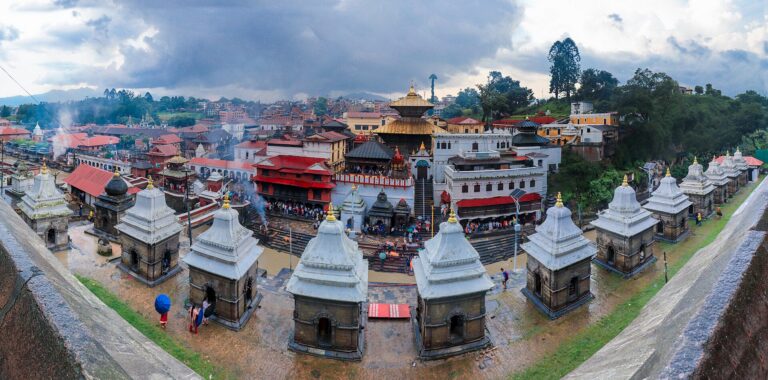 Sacred Nepal — Where the Gods DwellPashupatinath, Manakamana, Gosaikunda and Muktinath: the great Hindu pilgrimage.
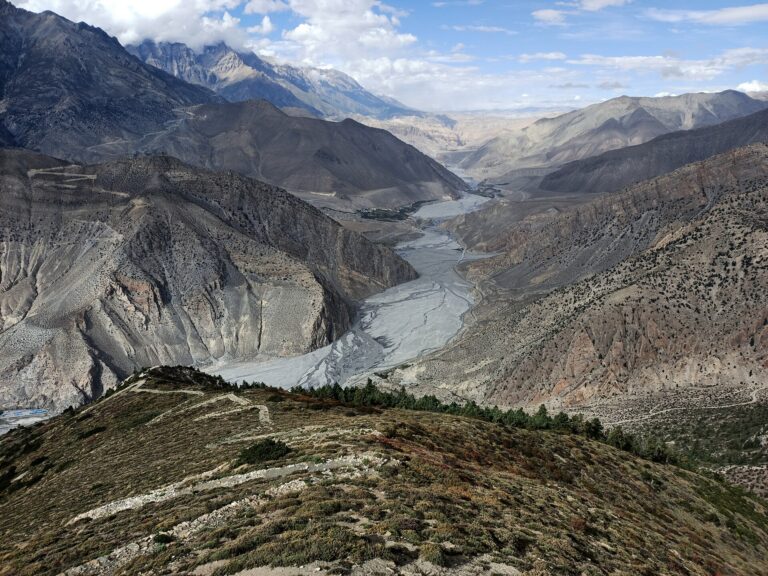 Kali Gandaki — The River That Carries GodShaligram stones, a forgotten holy city and the bend where the river flows north.
 Chitwan — The Jungle That Came BackFrom royal hunting ground to Asia's greatest wildlife comeback.
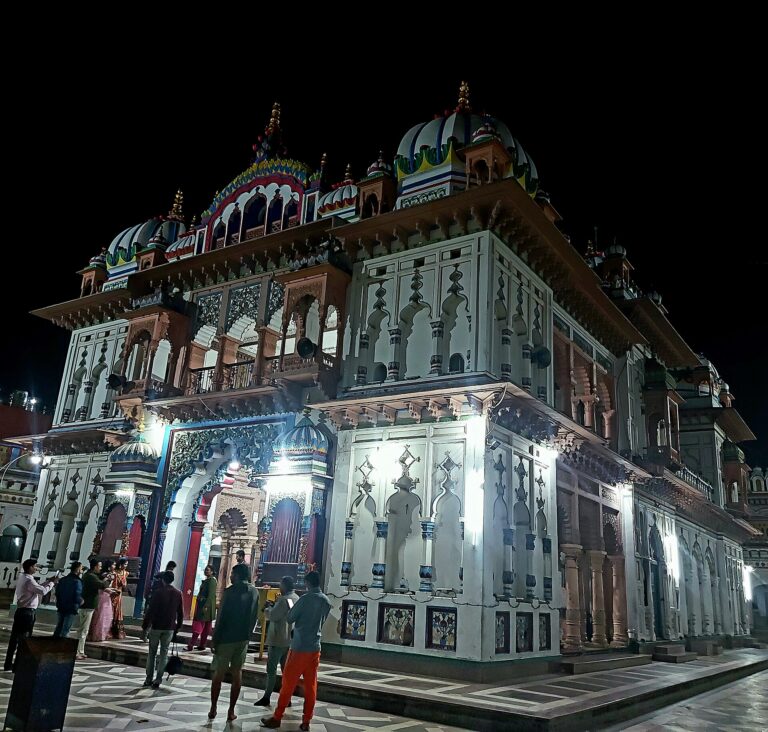 The Ramayana TrailFollow Sita through Nepal, from Janakpur to Valmiki Ashram.
 Kingdom of SitaJanakpur, where Ram broke Shiva's bow and married Sita.
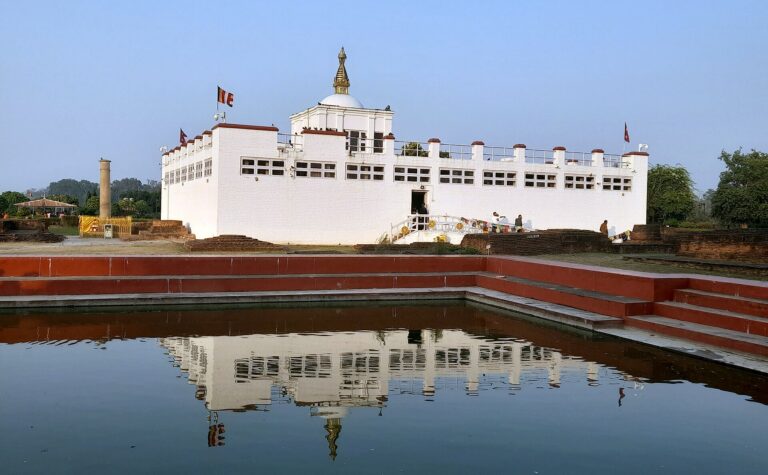 Birthplace of the BuddhaLumbini, the garden where the path to peace began.
 Khaptad — The Hermit's PlateauTwenty-two meadows, a hermit's ashram and a plateau few ever reach.
Sources: