A Nepal Epic · Chitwan National Park

Chitwan — The Jungle That Came Back

Once a royal hunting ground. Today, home to 145 wild tigers and hundreds of one-horned rhinos. Walk into Asia's greatest wildlife comeback story.

Plan my tripRead the story ↓

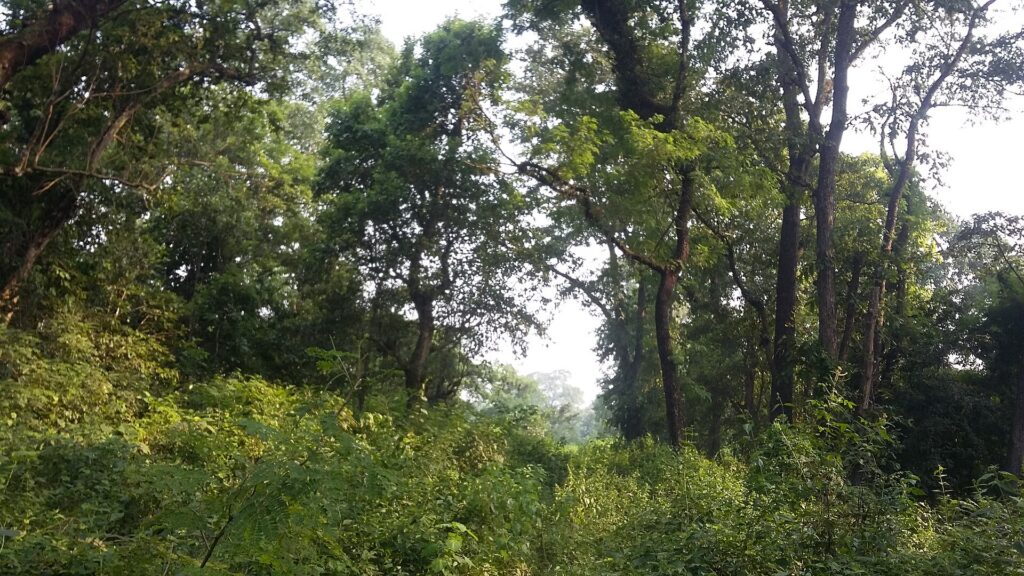
A hundred years ago, kings came to Chitwan to kill. Today, people come from around the world just to see what survived, and what came back. A rhino grazes where hunters once camped, a tiger crosses a sandy riverbank, and the Tharu people still dance the stories of the forest. This is not a zoo or a theme park. It is a living jungle that Nepal chose to save.

The Hunting Ground

Chapter 1

The Hunting Ground

For nearly a century, Chitwan was the private playground of Nepal's Rana rulers and their royal guests. Hunting camps stood along the rivers, and hundreds of elephants drove tigers and rhinos toward waiting guns. In the winter of 1911, King George V of Britain joined one such hunt, and dozens of tigers and rhinos were shot in a matter of weeks.

After the 1950s came a new threat. Malaria was controlled, settlers cleared the jungle for farms, and poachers hunted rhinos for their horns. By the 1960s only about 100 rhinos were left in all of Nepal. The jungle was disappearing.

The Rescue

Photo: Bharatadhikarimb, CC BY-SA 4.0

Chapter 2

The Rescue

In 1973 Nepal drew a line. Chitwan became the country's first national park, and in 1984 UNESCO listed it as a World Heritage Site. The Nepal Army moved in to guard the forest, and anti-poaching posts spread across the park.

The real turning point was people. Part of the park's income went back to the villages around it, and communities formed their own anti-poaching groups and community forests. Villagers who once saw wildlife as a danger began to see it as their future. Nepal went on to record several "zero poaching" years for rhinos.

The Return

Photo: Charles J. Sharp, CC BY-SA 4.0

Chapter 3

The Return

The animals came back. Nepal's wild tigers more than tripled, from 121 in 2009 to a record 429 in the July 2026 national census, with 145 of them in Chitwan. Rhinos climbed from about 100 in the 1960s to 752 nationwide in the 2021 count, 694 of them in Chitwan.

Today you can sit in a dugout canoe and watch a rhino wade across the river, or find fresh tiger pugmarks on a trail at dawn. Few places on Earth let you see a conservation victory with your own eyes.

  • 145wild tigers in ChitwanNational census, July 2026
  • 429wild tigers in NepalUp from 121 in 2009
  • 694one-horned rhinos in ChitwanNational count, 2021
  • 752one-horned rhinos in NepalUp from about 100 in the 1960s
People of the Forest

Photo: Pratap Baniya, CC BY-SA 4.0

Chapter 4

People of the Forest

Long before the park, the Tharu lived here. They are the original people of the Terai, at home in a jungle that outsiders once feared for its malaria. Their villages of mud-and-reed houses, painted with bold patterns, still sit at the forest's edge.

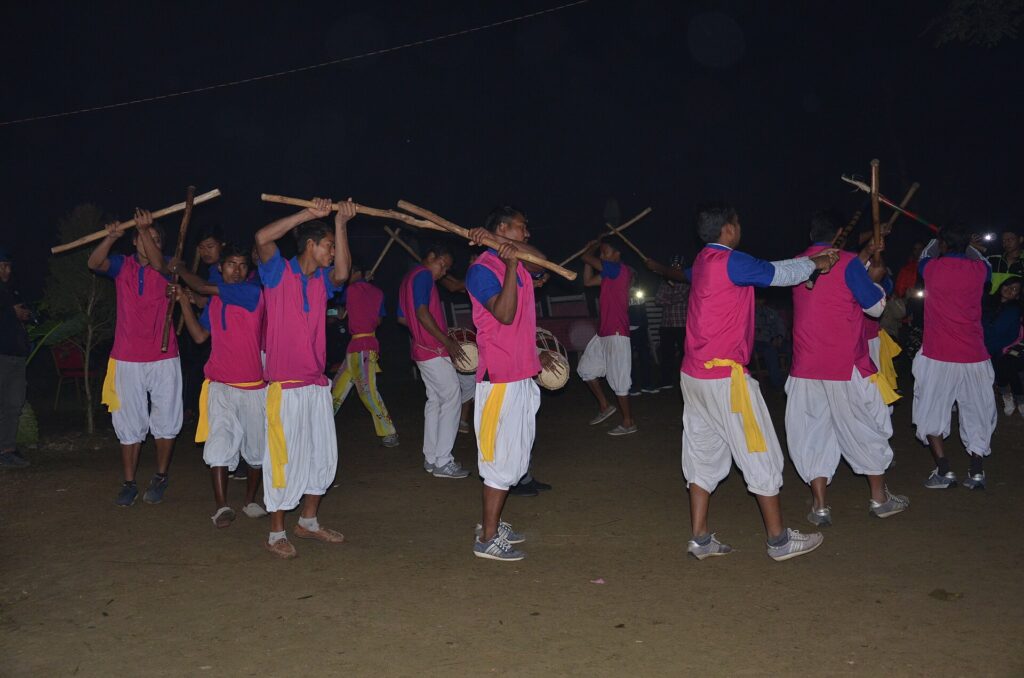
At dusk, Tharu men leap and strike long sticks in the stick dance, born from driving wild animals away from the fields. Taste dhikri, steamed rice-flour rolls, with fish curry. Then sleep in a community homestay, where your money stays in the village that protects the jungle.

  • See: Tharu Cultural Museum in Sauraha and an evening cultural show
  • Stay: community homestays at Amaltari and Barauli
  • Do: cook with a Tharu family, or cycle the village lanes at sunrise
The Sacred Jungle

Chapter 5

The Sacred Jungle

Chitwan is also a chapter of the Ramayana. Pilgrims believe that after Sita left Ayodhya she found refuge in the ashram of the sage Valmiki, deep in this forest. Here, tradition says, she gave birth to Luv and Kush, and Valmiki composed the epic itself.

  • Valmiki Ashram: a quiet forest shrine in the western jungle near Tribeni, on the Narayani. Go with a licensed guide.
  • Devghat: the sacred meeting of the Kali Gandaki and Trishuli rivers near Bharatpur, with ashrams, temples and a large Makar Sankranti fair each January.
  • Jatayu Restaurant: a vulture conservation feeding site in Nawalparasi, named after Jatayu, the vulture who fought Ravana to save Sita.

Follow the whole Ramayana Trail →

Birdwatching · Latest from the lakeshore

Bis Hajari Tal — where the morning mist keeps its secrets

Arrive just after sunrise and the lake is perfectly still. Dead trees stand in the water like sculptures, their reflections sharper than the trees themselves, and every branch seems to hold a bird. Then something moves across the surface: a crocodile, gliding without a ripple. This is Bis Hajari Tal, one of Chitwan's quietest and most rewarding places to watch birds.

A photographer on the sandy shore of Bis Hajari Tal at dawn, misty forest and dead trees mirrored in the still lake, Chitwan
Dawn at Bis Hajari Tal, November 2026

"Twenty thousand lakes." That is what Bis Hajari (बिसहजारी) means, and while the number is poetic, the feeling is real: a chain of oxbow lakes, marshes and channels hidden inside the Barandabhar forest, in the buffer zone of Chitwan National Park. Since August 2003 the lakes have been protected as a Ramsar Wetland of International Importance, the recognition given to the world's most valuable wetlands.

The forest around the lake is a living corridor between the Chitwan lowlands and the hills to the north, used by deer, wild boar, rhino and even tiger. For birdwatchers it means variety in a single walk: waterbirds resting on the drowned trees, kingfishers along the edges, and forest birds calling from the sal canopy behind you.

Winter mornings are the magic hours. From October to March, migrant waterbirds join the resident species, and the soft mist that hangs over the water until mid-morning turns every photograph into a painting. Bring binoculars, walk slowly and let your guide's ears find the birds before your eyes do.

Birds on the drowned trees
A crocodile crosses the lake
A group of birdwatchers with binoculars on the forested bank of Bis Hajari Tal, Chitwan
Morning birding party on the bank
Visitors photographing the misty lake from a leaf-covered viewpoint at Bis Hajari Tal
The lakeside viewpoint
Birdwatchers scanning the far shore of Bis Hajari Tal with binoculars and a spotting scope
Scanning the far shore
A birdwatcher with binoculars beside an old tree, canoes on the lake behind her, Bis Hajari Tal
Binoculars up

Start early

Be at the lake by sunrise. Birds are most active and the mist gives the best light for photos.

Walk with a guide

This is wild country shared with rhino, sloth bear and crocodiles. A local nature guide keeps you safe and finds birds you would walk past.

Pack light, dress quiet

Binoculars, a long lens, a warm layer for winter mornings and earthy colours. Keep voices low near the water.

Add Bis Hajari Tal to my tripChitwan guide or hotel? Get listed

Photos and videos: Shirlal Pariyar, Hotel Parkside, Sauraha, Ratnanagar Municipality, Chitwan. Taken at Bis Hajari Tal, November 2026.

Watch

Watch

Videos are from YouTube. Nothing loads from YouTube until you press play.

Inside Chitwan National Park · TNC Original Documentary · Watch on YouTube ↗

Chitwan National Park, a World Heritage Site in the Terai lowlands, protects sal forest, grassland and river habitat.

Ten places to see in Chitwan

  1. Chitwan National Park safari. Jeep and walking safaris in search of one-horned rhinos, deer and, with luck, a tiger.
  2. Sauraha. The main visitor village on the park’s edge.
  3. Rapti River. Dugout canoe trips past crocodiles and waterbirds.
  4. Elephant Breeding Centre. A government centre near Sauraha.
  5. Bis Hazari Tal. “Twenty Thousand Lakes”, a wetland known for birdwatching.
  6. Tharu Cultural Museum. The traditions of the Tharu people of the Terai.
  7. Kasara. The park headquarters, with the gharial breeding centre.
  8. Meghauli. A quieter gateway on the park’s western side.
  9. Devghat. A pilgrimage site at the meeting of the Trishuli and Kali Gandaki rivers.
  10. Safa Mal and MRF. A private initiative by Nepalis living in Nepal and abroad. It produces Safa Mal, an organic bio fertilizer for farms and gardens.

Plan your visit

Add these places to your own route with the trip planner, and check the best time to visit Nepal.

Wildlife-friendly experiences

Experience Chitwan

  • Jeep safari into the core zoneRhino, tiger tracks, deer, sloth bearHalf or full day
  • Dugout canoe on the RaptiCrocodiles, kingfishers, river birds1–2 hours
  • Guided jungle walkTracking and the feel of the forest2–6 hours
  • Gharial breeding centre, KasaraThe critically endangered gharial1 hour
  • Birding at Bis Hazari TalOver 500 bird species in the parkHalf day
  • Tharu village and cultural showCulture, food and danceEvening
  • Sunset on the Sauraha riverbankGolden light and river views1 hour

Spot the Chitwan Big 5

Our ethical promise: We do not promote elephant-back rides or tiger selfies. Every experience here is a jeep, canoe or walking safari with a licensed park guide.

Where to stay

Stay in Chitwan

Travel the story

Travel into the jungle that came back

Meet the rhinos, the river and the Tharu people who share the forest: the comeback story, seen from a canoe and on foot.

  1. KathmanduArrive

    Arrive, then drive or fly to Bharatpur the next morning.

  2. SaurahaInto the park

    A canoe ride on the Rapti at dawn, a jungle walk or jeep safari with a licensed guide, and sunset on the riverbank.

  3. Tharu villagesThe people of the forest

    Visit a Tharu village and museum, and the Bis Hajari lakes for birds.

  4. KathmanduReturn

    Return to Kathmandu, or continue to Lumbini or Pokhara.

Open this 5-day route in the trip plannerTime it with a festival

The planner works out each day, the travel times and the map. You can change the number of days and the start date there.

Plan your visit

Plan your Chitwan trip

When to go

  • October–March Pleasant days and cool mornings: the best all-round season.
  • February–April The best wildlife sightings, after the tall grass is cut.
  • May–June Very hot. Go on safari early in the morning.
  • June–September Monsoon. Many jungle activities pause.

How to get there

  • By air A short domestic flight from Kathmandu to Bharatpur.
  • By road About 5–6 hours from Kathmandu, or 4–5 hours from Pokhara, by tourist bus or private car.
  • From India Through the Birgunj or Bhairahawa border crossings.

Where to base yourself

  • Sauraha Lively and riverside, with the most choice. Good for first-timers and all budgets.
  • Meghauli Remote luxury jungle lodges. Good for couples and high-end travel.
  • Amaltari and Barauli Tharu community homestays. Good for culture and low-impact travel.
  • Madi and Thori side The quiet southern edge with few tourists. Good for repeat visitors.

Two to three nights is ideal. Park entry fees and safari permits change, so check them with the park before you go. Official website

Build my Chitwan itinerary

Chitwan questions

What is the best time to visit Chitwan?

October to March for the weather; February to April for the best wildlife sightings.

Can I see a tiger in Chitwan?

It is possible but never guaranteed. Chitwan has about 145 tigers, but they are shy. Rhinos are seen on most safaris.

How many days do I need in Chitwan?

Two to three nights is ideal for safaris, a canoe trip and a Tharu village visit.

How do I get from Kathmandu to Chitwan?

Take a short flight to Bharatpur, or travel about 5–6 hours by road.

Is Chitwan safe for visitors?

Yes, with licensed guides. Never walk inside the park alone.

Where is Valmiki Ashram?

In the western part of Chitwan National Park, near Tribeni on the Narayani River.

Nepal Epics

Continue the journey

Wildlife figures from:

Get my free Chitwan plan

What can I do near me now?