
A Nepal Epic · Spiritual journey
Kali Gandaki — The River That Carries God
One river in the world gives Hindus the shaligram, the black stone worshipped as Vishnu himself. Follow the Kali Gandaki from the roof of Mustang to the plains, past a forgotten holy city and the bend where the river turns back towards the mountains.
Most pilgrims know the Kali Gandaki only at its top, at Muktinath. But the river is sacred for its whole length. It rises near Damodar Kunda in Mustang, cuts between Annapurna and Dhaulagiri, slows through the hills of Palpa and Syangja, and ends at Devghat. Along the way lie places few travellers have heard of: Ruru Kshetra, one of Nepal's four great dhams, and a quiet stretch where the river flows north and a new centre of yoga, learning and healing is growing on its banks.

Chapter 1
The Stone That Is Vishnu
In the bed of the Kali Gandaki lie smooth black stones marked with spirals. Science calls them ammonites, the fossils of sea creatures from a time when the Himalaya lay under an ocean. Hindus call them shaligram and worship them as a form of Lord Vishnu. No image needs to be carved: the stone itself is the god.
Shaligrams are kept in temples and family shrines across Nepal and India, and they come from this one river. That is why the Kali Gandaki is holy from its source to its end, and why pilgrims have walked its banks for centuries.
- See shaligrams honoured at Muktinath and at the Rishikesh temple in Ridi
- Leave the stones in the river: do not collect them from the riverbed
- The gorge between Annapurna and Dhaulagiri is one of the deepest in the world
Chapter 2
From the Roof of Mustang
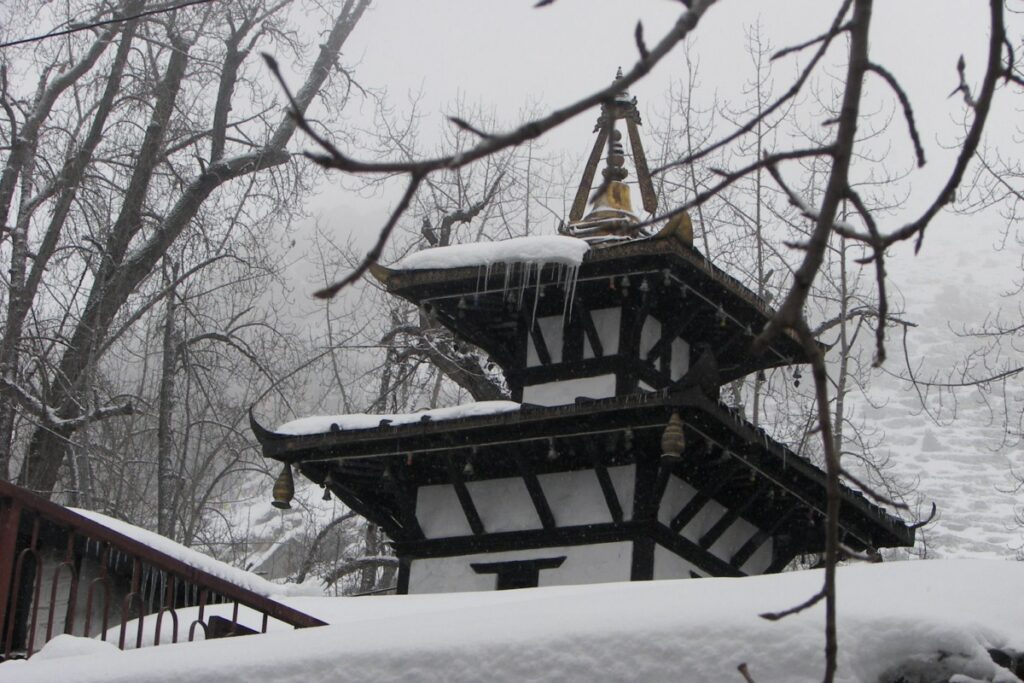
Tradition places the river's origin at Damodar Kunda, a group of high lakes in Mustang that only strong, well-acclimatised pilgrims reach. Below it stands Muktinath, the temple of liberation, where water falls from 108 spouts.
From here the river runs south through Kagbeni and Jomsom, then drops through the great gorge towards the green hills. Pilgrims on foot have recently walked the whole way between Devghat and Damodar Kunda to show that the river is one single sacred road.
Chapter 3
The Forgotten Dham
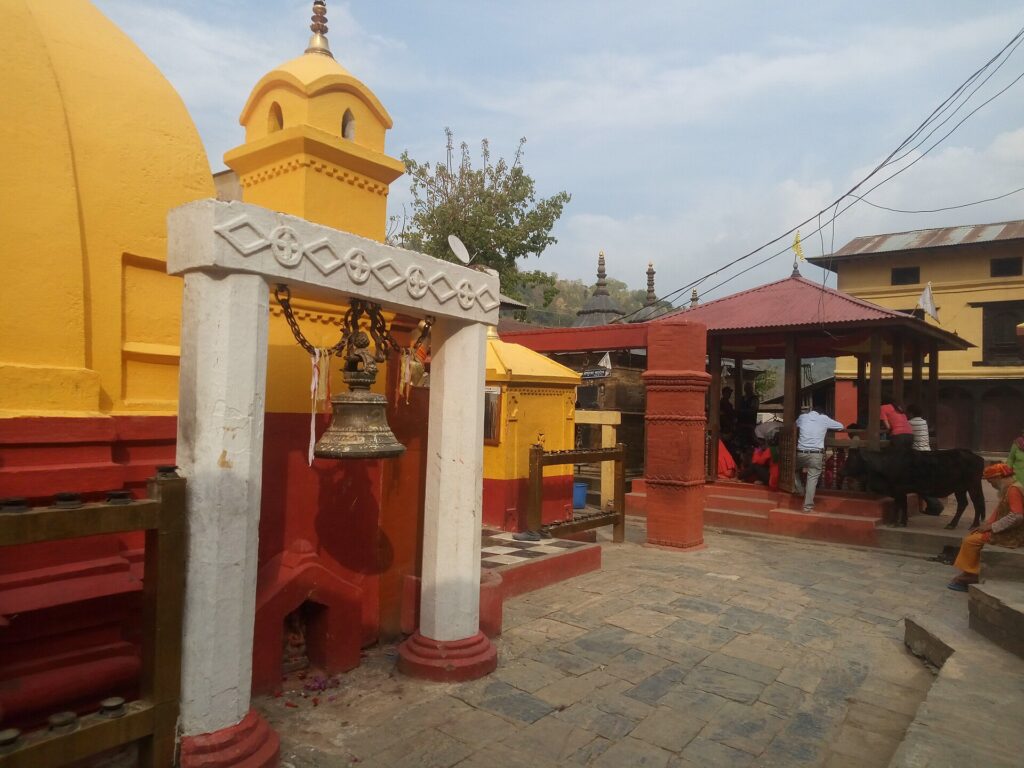
Where the Ridi Khola meets the Kali Gandaki, three districts touch: Palpa, Gulmi and Syangja. This is Ruru Kshetra, also called Ridi, counted among the four dhams of Nepal. Tradition says Mukunda Sen, king of Palpa, found the image of Lord Rishikesh while bathing in the river and built the temple that still stands here.
The temples and old houses of Ridi date from the Sen period, and the Rishikesh complex is on UNESCO's tentative list for World Heritage. Every Maghe Sankranti, in mid-January, the three-day Ridi Mela fills the confluence with pilgrims who come to bathe at dawn.
- 3districts meet at Ruru KshetraPalpa, Gulmi and Syangja
- 30km from Tansen to RidiNorth-west, by hill road
- 3days of the Ridi MelaAt Maghe Sankranti
- 108water spouts at MuktinathAt the head of the river
- About 30 km north-west of Tansen, on a winding hill road
- Ridi Mela: three days at Maghe Sankranti, in mid-January
- Combine it with Tansen's old bazaar and Rani Mahal on the same river
Chapter 4
Where the River Turns North
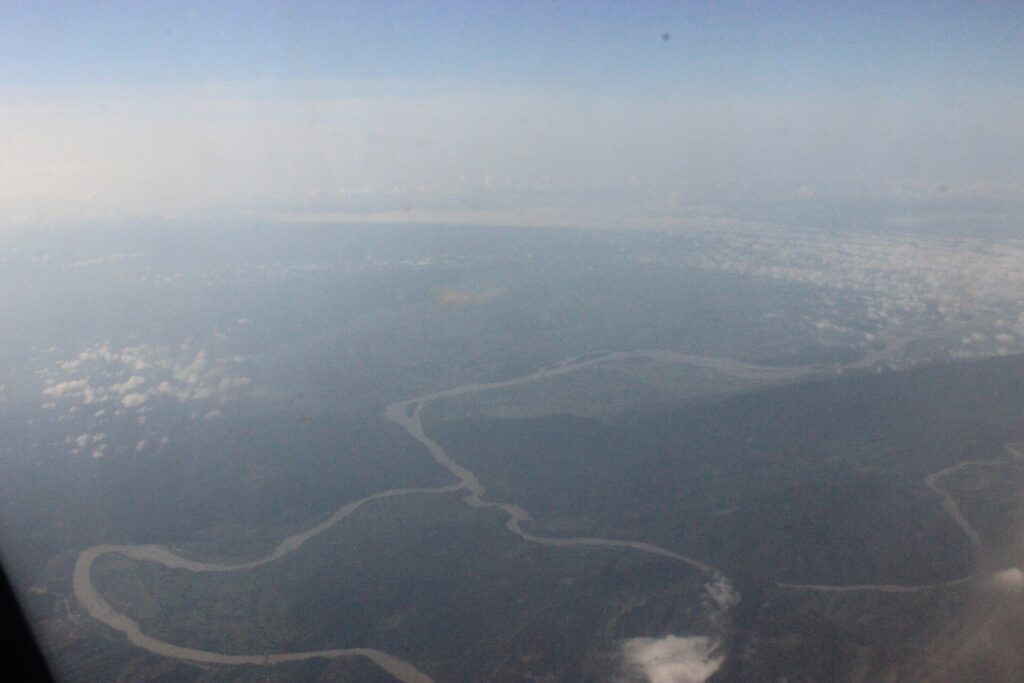
Rivers that flow north are rare in the Hindu world and held to be especially holy: the Ganga at Varanasi is the famous example. Between Asherdi in Palpa's Rambha Rural Municipality and Malunga in Syangja's Galyang Municipality, the Kali Gandaki does the same. It is called uttarvahini, north-flowing.
A spiritual centre is growing on this bend. Nepali media reported in November 2026 that the Lakshminarayan Dham temple, a residential gurukul school and a small natural-therapy hospital already stand here, and that a large shaligram temple, a pilgrims' rest house and 108 water spouts are planned. Each autumn a month-long fair brings daily yoga, meditation, holy bathing and discourses to the riverbank. The organisers say hundreds of thousands of people attend, and local leaders hope the place will draw pilgrims from India and beyond.
- For now this is a place for pilgrims, not a finished tourist site: expect simple facilities
- The autumn fair runs for about a month around the Ekadashi of Kartik
- Figures for visitors and for the length of the north-flowing stretch come from the organisers
Chapter 5
Where the River Ends
At Devghat, near Bharatpur, the Kali Gandaki meets the Trishuli. From here the joined river is called the Narayani, another name of Vishnu. Ashrams and temples line the banks, and many elderly Hindus come to spend their last years in prayer beside the water.
Each January the Makar Sankranti fair draws pilgrims from across Nepal and India to bathe at the confluence. For the traveller, Devghat is the easiest place to meet the sacred river: it lies a short drive from the jungle lodges of Chitwan.
Watch
Watch
Videos are from YouTube. Nothing loads from YouTube until you press play.
River experiences
Along the sacred river
- Dawn bath at Ruru KshetraThe confluence of three districtsEarly morning
- Rishikesh temple, RidiA Sen-period temple townHalf day
- Ridi MelaThree days of pilgrims and tradeMid-January
- The north-flowing bendYoga, discourses and holy bathing at the autumn fairOctober–November
- Devghat confluenceWhere the Kali Gandaki becomes the NarayaniHalf day
- Muktinath yatra108 spouts at the head of the river3–4 days from Pokhara
Follow the river: five sacred stops
Travel the river with respect: These are living places of worship. Dress modestly, ask before photographing people at prayer or bathing, do not take stones from the riverbed, and carry your rubbish out with you.
Where to stay
Where to stay along the river
Travel the story
Travel the sacred river
Meet the river at three points in one journey: the gateway to Muktinath, the forgotten dham of Ruru Kshetra and the confluence at Devghat.
-
PokharaGateway to the source
Rest by the lake. Muktinath, at the head of the river, is a further journey by flight or jeep through Jomsom: add three to four days and take the altitude seriously.
-
TansenThe hill town above the river
Stay in the old bazaar. Tansen is the base for the two river sites that follow.
-
Ruru Kshetra (Ridi)The forgotten dham
A day trip of about 30 km to the confluence where three districts meet and the Rishikesh temple stands.
-
The north-flowing bendWhere the river turns north
Between Palpa and Syangja, a growing centre of yoga, learning and pilgrimage. Facilities are simple, so go with a local driver.
-
DevghatWhere the river ends
Near Bharatpur the Kali Gandaki meets the Trishuli and becomes the Narayani. Stay in Sauraha and add a jungle safari.
Open this 9-day route in the trip plannerTime it with a festival
The planner works out each day, the travel times and the map. You can change the number of days and the start date there.
Plan your visit
Plan your Kali Gandaki journey
When to go
- October–March The best weather for Ridi, the north-flowing bend and Devghat.
- Maghe Sankranti Mid-January: the Ridi Mela and the Devghat fair.
- Kartik October–November: the month-long fair on the north-flowing bend.
- Muktinath March–May and September–November.
Getting there
- Ruru Kshetra (Ridi) By road from Tansen, about 30 km to the north-west.
- The north-flowing bend By road from Tansen or from Galyang on the Pokhara–Butwal highway. Ask locally for the current road condition.
- Devghat A short drive from Bharatpur and Sauraha in Chitwan.
- Muktinath Fly or drive from Pokhara to Jomsom, then continue by jeep.
Good to know
- Base yourself Tansen has the best choice of places to stay for Ridi and the bend.
- Facilities The river sites are simple. Carry water, cash and a torch.
- Festival dates They follow the lunar calendar and move each year.
Two days from Tansen covers Ruru Kshetra and the north-flowing bend. Add a day for Devghat and three to four days for Muktinath.
Kali Gandaki questions
What is a shaligram?
A black fossil stone, an ammonite, found in the Kali Gandaki river and worshipped by Hindus as a form of Lord Vishnu.
Where is Ruru Kshetra?
At Ridi, where the Ridi Khola meets the Kali Gandaki, at the meeting point of Palpa, Gulmi and Syangja districts. It is about 30 km north-west of Tansen.
What does uttarvahini mean?
North-flowing. A stretch of the Kali Gandaki between Palpa and Syangja flows north, which Hindu tradition holds to be especially sacred.
Where does the Kali Gandaki end?
At Devghat, where it joins the Trishuli. From there the river is called the Narayani.
Can I take a shaligram home from the river?
Please do not collect stones from the riverbed. See them in the temples, and ask locally about the current rules before buying one.
Nepal Epics
Continue the journey
 Kathmandu Valley — The Lake That Became a KingdomA lake drained by a sword, three royal cities and a living goddess.
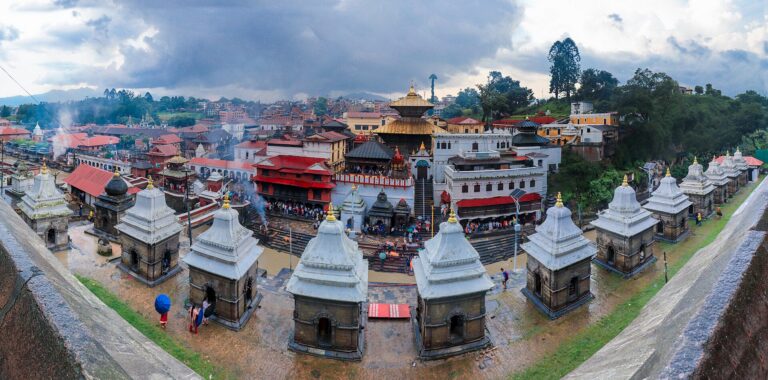 Sacred Nepal — Where the Gods DwellPashupatinath, Manakamana, Gosaikunda and Muktinath: the great Hindu pilgrimage.
 Chitwan — The Jungle That Came BackFrom royal hunting ground to Asia's greatest wildlife comeback.
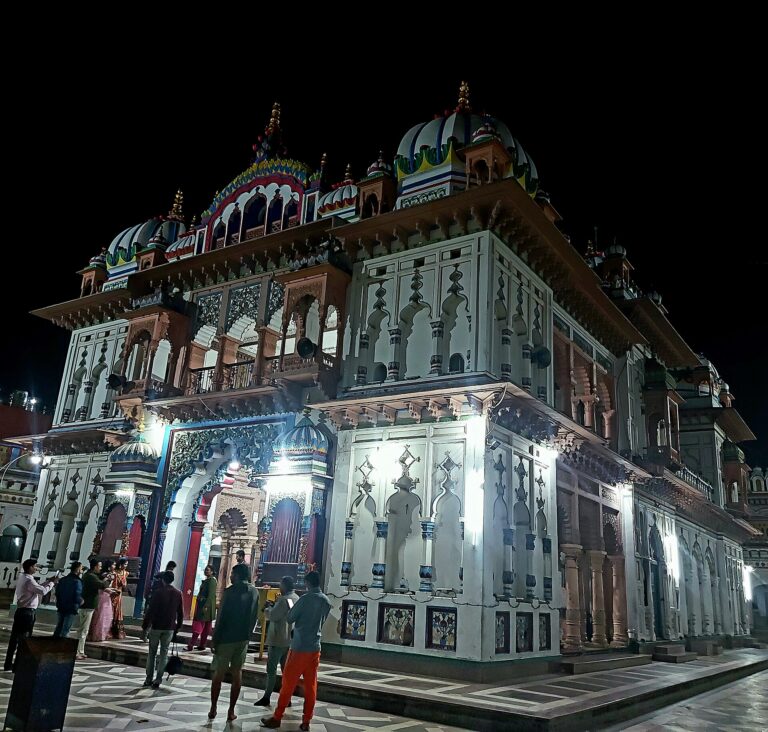 The Ramayana TrailFollow Sita through Nepal, from Janakpur to Valmiki Ashram.
 Kingdom of SitaJanakpur, where Ram broke Shiva's bow and married Sita.
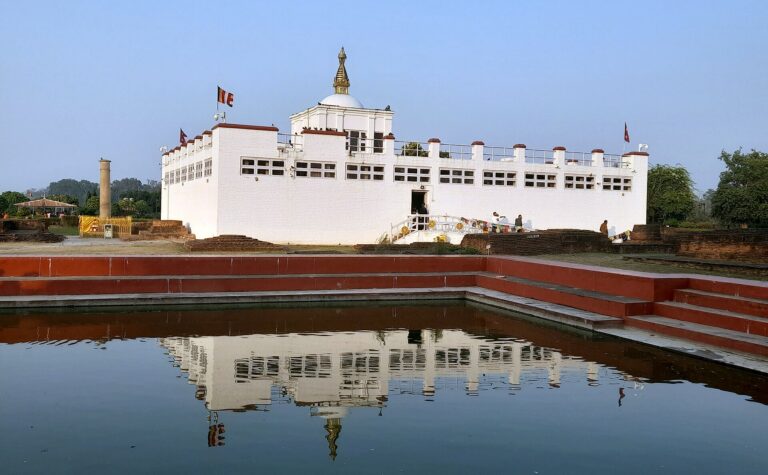 Birthplace of the BuddhaLumbini, the garden where the path to peace began.
 Khaptad — The Hermit's PlateauTwenty-two meadows, a hermit's ashram and a plateau few ever reach.
Sources: